A field guide to the business: where the stones come from, what to make and what to buy, what it really costs, the rules that can close an account, and how to start small.
Research current to Thursday, November 12, 2026. Public sources only, each linked with its date.
The idea, in short
Live auctions of lab-grown diamonds became one of TikTok Shop's hottest formats in the summer of 2026. Bids start at $1, a countdown runs for 10 to 30 seconds, and most stones sell for $100 to $500.
A lab-grown diamond is a real diamond, the same carbon crystal as a mined one, made in a factory in weeks instead of underground over ages. Prices have fallen about 96% since 2018, so a certified 1 carat stone that once cost thousands now trades wholesale for under $150. Live streaming turns that into entertainment: a host shows each stone under bright light with its grading report, the room bids, and the next lot follows a minute later.
The demand is real. TikTok Shop in the US sold $11.8 billion in the first half of 2026, and buyers who make 20+ purchases a quarter (5% of shoppers) account for about 30% of spending. Some diamond buyers collect stones by the dozen. (Mashable, Aug 24 2026; Shop! Association, Aug 27 2026)
Watch · 3 min 35 sThe whole plan in under four minutes: how the lives work, what stones really sell for, where to buy, what to make in-house, and the first steps. Captions are built in, so it works with the sound off.
Four things that shape the whole plan
The door narrowed. On Oct 26 2026 TikTok made loose diamonds a restricted, invite-only category. Every stone needs a GIA or IGI report and sellers must be approved first. Finished jewelry has its own document rules but is not invite-only.
Loose stones are close to a zero-margin game. On a leading seller's live we watched, 1–4 ct stones sold for about $90–125 per carat, at or below the India wholesale price. Only sellers who buy at the source make money on them.
Finished jewelry is where the margin is. Simple set pieces (studs, solitaire pendants and rings) make about 30%. Heavy gold pieces such as tennis bracelets make almost nothing at today's gold price.
Prices keep falling. Wholesale fell 26% in 2025 and about 13% a year into mid-2026, so stock held for months loses value.
Know the stone
What a buyer on a live is looking at: the shape, how big a carat really is, the colour and clarity scales, how the stone was grown, and how to check its report.
Shapes
Round is the classic and the priciest per carat; fancy shapes run about 10–20% below rounds at wholesale. (Labgems, May 25 2026)
Round
Oval
Cushion
Princess
Emerald
Asscher
Radiant
Pear
Marquise
Heart
How big is a carat? Drawn to scale
Top view of round brilliants with typical proportions, to scale with each other and with a dime. Weight grows faster than width: a 2 ct stone is twice the weight of a 1 ct but only about 25% wider. Other shapes of the same weight look a little different in size.
The colour scale
D is the whitest. Because lab-grown stones are cheap, most stones sold live are D to F; near-colourless G to J is the value buy. Colour is graded face-down against master stones, so a phone camera under bright live lights cannot show the difference between neighbouring grades.
The clarity scale
Clarity is graded under 10x magnification. Flawless (FL) and internally flawless (IF), then very very slightly included (VVS1–2), very slightly included (VS1–2), slightly included (SI1–2) and included (I1–3). Down to VS2, inclusions are usually invisible to the eye. Drawn as an illustration, not to grading standard.
Two ways to grow a diamond
CVD (chemical vapor deposition). Carbon from a gas settles onto thin diamond seed plates, a layer at a time, over weeks. Most CVD stones are grown and cut in India. Some are heated after growth to improve colour; the report says so.HPHT (high pressure, high temperature). A press squeezes carbon and a molten metal around a tiny seed at about 5–6 gigapascals and 1,300–1,600°C, close to conditions deep in the earth. Most HPHT stones come from Henan province, China.
Both are real diamonds and look the same to the eye. Only a lab can tell them apart, and the grading report names the method. Neither is "better"; judge the stone by its grades and its cut.
How to read a grading report
Every stone sold on TikTok needs an IGI or GIA report. This is a sample layout with made-up numbers, not a real report; it shows where to look on an IGI-style lab-grown report.
Sample report layoutNot a real document
1Report number
LG000000000
2Description
LABORATORY GROWN DIAMOND
3Shape and cutting style
ROUND BRILLIANT
3Measurements
6.45 – 6.48 × 3.98 mm
4Carat weight
1.02 CARATS
5Colour grade
E
6Clarity grade
VS1
7Cut · polish · symmetry
EXCELLENT · EXCELLENT · EXCELLENT
Fluorescence
NONE
8Comments
Created by Chemical Vapor Deposition (CVD) growth process. As grown, no indication of post-growth treatment.
9Inscription
LG000000000
Report number. Look it up on the lab's own website. The result must match the paper exactly.
Description. Must say laboratory grown. A "natural" report with a lab stone, or the reverse, is a swap.
Shape and measurements. Measure the stone. A 1 ct round is about 6.4–6.5 mm across; a mismatch means the wrong stone.
Carat weight. Weighed to the hundredth.
Colour. D is best; see the scale above.
Clarity. VS2 and above is eye-clean for most buyers.
Cut, polish, symmetry. Cut drives sparkle, and bright live lights hide a poor cut. Prefer Excellent or Ideal.
Growth method and treatment. CVD or HPHT, and whether it was treated after growth.
Inscription. The report number is laser-written on the girdle (edge). Read it with a loupe and check it matches.
Since Oct 1 2025, GIA's lab-grown reports give only "Premium" or "Standard" instead of colour and clarity grades; IGI keeps the full grades. Fake reports and fake inscriptions exist (IGI; Jewellery Monthly, Jul 14 2025).
Types of diamond, and the look-alikes
Six kinds of stone get called "diamond" on a live, and only some of them are. Here is what each one is, what it costs, how it wears and resells, and what the law says you must call it.
Scales are not linear in the real world: Mohs 10 is several times harder than 9. Moissanite's extra fire is the "disco ball" look that trained eyes spot; sapphire looks glassy beside diamond. (Gem Society comparison chart; 16 CFR 23.12 for diamond's hardness of 10)
Side by side, as of Nov 2026
Stone
Price per carat
Hardness
Looks
Resale
Graded by
Must be called
Natural mined diamond
~$3,500–3,900 retail for a 1 ct round; wholesale 30–40% below its 2021 peak
10
The benchmark
Best of the group, roughly 20–60% of the price paid Unverified
GIA (full 4Cs), IGI
"Diamond"; "natural" is allowed
Lab-grown, CVD
$73–142 wholesale; from ~$135 online for 1 ct
10
Identical to mined
Low, about 5–40% Unverified
IGI (full 4Cs); GIA "Premium/Standard"
"Laboratory-grown diamond", equally prominent
Lab-grown, HPHT
Same grid as CVD; priced by grade, not method est.
Formed in the earth over billions of years and dug out. Prices are falling (rough down 32% year on year to $105/ct in H1 2026 at De Beers), but a 1 ct natural round still retails for six or more times the online price of a lab-grown one.
For buyers
Keeps the most resale value; rarity and tradition.Many times the price for the same look.
For us
Big tickets.Big capital per stone, loose-diamond invite needed, and the costliest mistake in the trade: a lab stone passed off as natural.
Lab-grown, CVD
Grown from gas onto seed plates, mostly in India; often heated after growth to improve colour, which the report states.
For buyers
A real diamond for a fraction of the price; IGI gives full grades.Little resale value, and prices keep falling.
For us
Cheap stock, easy certificates, what TikTok buyers expect.Held stock loses value monthly; loose stones clear near wholesale on lives.
Lab-grown, HPHT
Grown in a press from carbon and molten metal, mostly in Henan, China.
For buyers
The same diamond as CVD.Some contain metal flux specks; method makes no difference to price.
For us
Good melee (tiny stones) for studs and bracelets.Some HPHT stones conduct electricity and read as "moissanite" on a multi-tester, which confuses buyers testing at home. (Moissanite Co. note)
Treated natural diamonds
Mined stones improved after cutting: HPHT heating to whiten colour, laser drilling, or glass filling of cracks ("clarity enhanced").
For buyers
A natural stone for less.Fillings can cloud or crack under a jeweler's torch; weak resale.
For us
None worth the risk.Treatment must be disclosed every time; fracture-filled stones get no GIA grade. Skip.
Fancy-colour lab-grown
Pink, blue, yellow and green lab diamonds, coloured during growth (boron for blue) or by treatment after it.
For buyers
Colours that cost a fortune in natural stones.Treated colour; low resale.
For us
Stands out on camera; a higher price per carat than white lab stones.Colour is hard to show truly on a phone; disclose both lab-grown and treatment.
Moissanite
Silicon carbide, almost all made in a lab. Not a diamond.
For buyers
Hard, very sparkly, durable.Now often costs as much as, or more than, a lab diamond of the same size; no resale.
For us
Fine as its own honest product.The most common fake on TikTok and eBay; one call of "diamond" is an FTC and TikTok violation.
Cubic zirconia
A cheap lab-made crystal, the classic costume-jewelry stone.
For buyers
A few dollars.Scratches, clouds, and looks it within a year.
For us
Only for display props.Off-brand for a diamond business.
White and lab sapphire
Corundum, the same mineral as blue sapphire, without colour. Mined, or made in a lab for very little.
For buyers
Hard and cheap if lab-made.Little sparkle; collects grease and looks dull.
For us
Lab gemstone bundles sell on lives.Must say "lab-created" every time; we saw it left out on a live.
What the FTC Jewelry Guides require, by type
Lab-grown diamonds, white or colour: "laboratory-grown", "laboratory-created" or "[maker]-created" immediately before the word, equally prominent; "cultured" only with that qualifier; never "real", "genuine" or "natural" (§23.25, §23.12, §23.27).
Treated stones: disclose the treatment when it is not permanent, needs special care, or significantly affects value, and online in the product description itself (§23.24, applied to diamonds by §23.14).
Moissanite and CZ: never the unqualified word "diamond" (§23.12(b)). Sold as a diamond look-alike, it needs "imitation" or "simulated" in front; "faux" is not enough (§23.25(b)).
Sapphire: "sapphire" alone means mined; a lab stone is "laboratory-created sapphire" (§23.25(a)–(b)).
How the lives work
What sells, how it is shown, and what one four-hour show from a leading TikTok Live seller looked like.
Formats on TikTok Shop
Live auction, one stone at a time. A $1 start and a 10–30 second countdown. This is the main format.
Assorted packs or "bags". Several small stones per lot at a fixed price, about $70–90.
Mystery boxes. A random stone for about $43. These carry policy and legal risk (see the rules).
Fixed-price jewelry. From about $195 studs to $9,000 rings.
Giveaways during long "mega lives" to pull a crowd. Press reports describe shows running up to nine hours.
We watched one full afternoon live (about 12:37 to 4:32 PM Eastern) from one of the largest lab-diamond auction accounts on TikTok, and noted lots, prices and the way each stone was presented. Prices were taken by ear and are approximate.
Pace: about 144 sold lots in about 3 hours, roughly 45 an hour. In the small-stone stretches it ran about one lot a minute.
Crowd: 200+ viewers at once, with follower and like goals used to keep the room engaged.
Crew: a main auctioneer, a second host for gemstone bundles during breaks, and an off-camera runner passing stones and printing order stickers.
Timers: $1 starts with 7–20 second "sudden death" timers, the length voted on by chat. The host coached viewers to set TikTok's automatic "custom bids".
Big stones: 4–11 ct stones went to a set "flash" price unless chat pushed for a $1 start.
Bundles and jewelry: "two for two" up to "ten for ten" bundles of small stones, matched pairs for studs, lab-grown gemstone bundles, and 1 ctw 14k studs at a $350 set price.
Presentation: a branded backdrop, gloves and tweezers, and the stone's IGI report in an acrylic stand in frame for every lot, with a numbered sticker tying each sale to its report.
Terms said out loud: US shipping only, ships in 3–5 business days, auctions are final sale, and a video receipt for each win.
Observed hammer prices by size (about 40 audible lots, Nov 12 2026)
Stone size
About $ per carat
Examples
Under 0.5 ct
$55–160
0.30 ct D VS1 for $47; 0.40 ct D VS1 for $44
0.5–1 ct, pairs and bundles
$75–160
Pair of 0.52 ctw for $71; 10-stone bundle of ~3–4 ctw for $300
1–2 ct
$90–110
1.04 ct cushion E VS2 for $96; 1.10 ct heart for $102; 1.96 ct emerald ~$178
2 ct and up
$95–125
3.06 ct oval for $303; 4.10 ct pear ~$380
What not to copy
"Lab-grown" was said out loud only about 6 times in 3.5 hours; most lots were called just "diamonds". The FTC wants the qualifier every time.
Lab-grown sapphires were sold as "IGI certified" without the word "lab" being said, although the report on screen read "laboratory grown sapphire".
About 11 "retails at $X" claims were made for stones that sold for roughly 8–12% of the figure. TikTok bans unsupported value claims.
"Natural" gemstones were offered without certificates or treatment disclosure.
What that means for a new seller
Big auction sellers clear loose stones at about the wholesale cash price, so their margin must come from buying direct at the source plus volume, and from set-price lots and jewelry.
A new seller paying a New York dealer's or a platform's markup cannot win the $1-start loose-stone game.
The opening is finished jewelry and set-price lots, run with the same live tools: countdowns, chat votes, auto-bid coaching, a shout-out for every winner, and a second host.
Say "lab-grown" on every lot, including gemstones, and make no "retails at" claims.
Where to buy
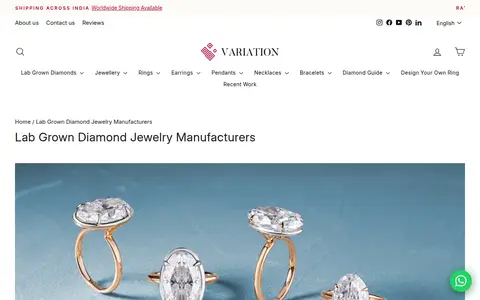
Most lab-grown stones sold in the US are grown and cut in India; China is the other big source. The whole game is buying close to the India price.
GrowerIndia (CVD) or China (HPHT)
Cutter or traderSurat and Mumbai; Hong Kong
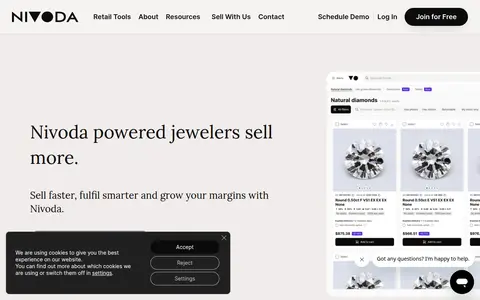
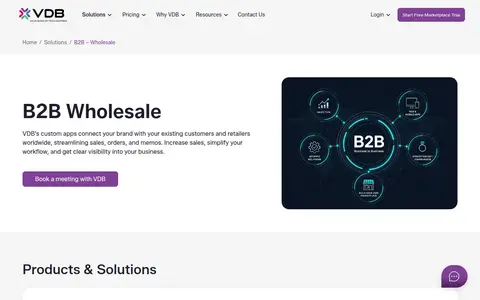
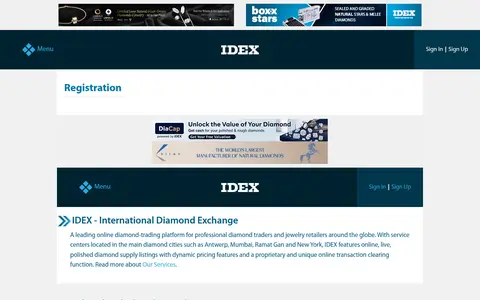
US importer or platform47th Street dealers, Nivoda, Kira Jewels USA
A US shopper can already buy a 1 ct IGI stone online for about $135. A seller getting $100–250 for one on TikTok has to buy at roughly the India cash price plus 10–40%. That means an importer who buys in India, or India directly. Import duty on lab-grown stones is 10% from India (Section 301, since Jul 24 2026) and 12.5% from China and Hong Kong. Unverified(GJEPC, Jul 2026; check with US Customs)
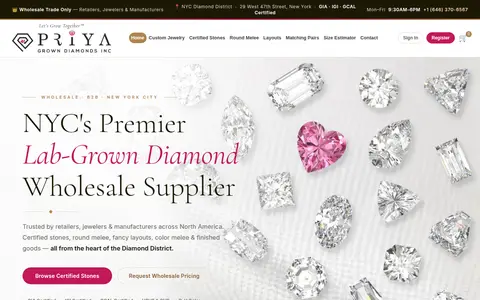
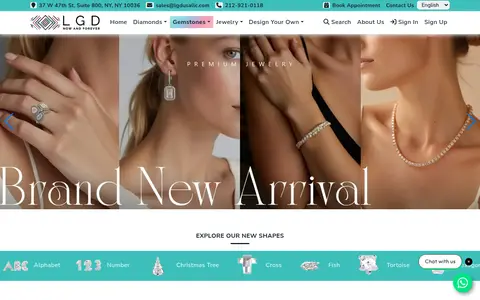
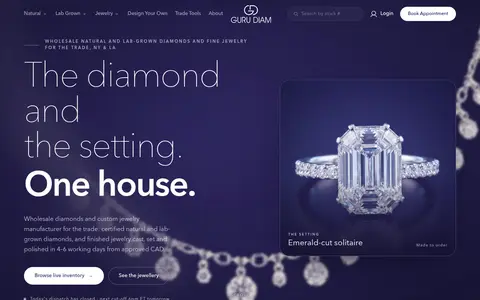
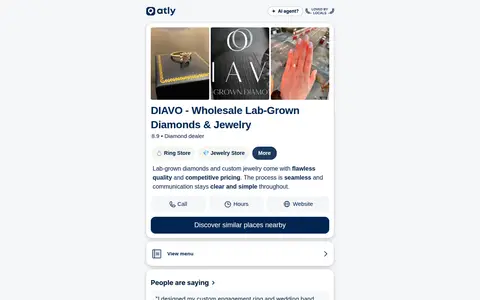
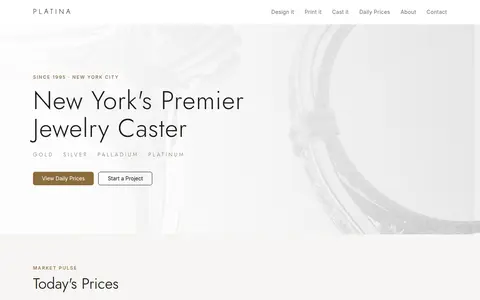
New York's Diamond District (West 47th Street)
Street-level booths sell to the public; wholesale offices are upstairs and want trade papers. Buying on 47th Street does not by itself mean wholesale prices. Our rating is for a small new business buying its first stock.
Screenshots of public pages, taken Nov 12 2026. Each links to the live page.
How buying in person works
Resale paperwork. New York does not accept other states' resale certificates; the buyer gives the seller NY Form ST-120. An out-of-state business not required to register in New York fills in Part 2. (Zamp)
Payment. Wire, cash, cashier's check or cash on delivery. Cash over $10,000 triggers IRS Form 8300 reporting.
Memo (stones on loan). Terms run from 3 to 30+ days, but usually need trade references, a Jewelers Board of Trade credit check and jewelers block insurance. Expect to pay up front at first.(Rapaport)
Minimums. None published. Sealed bags and parcels cost less per stone than single stones.
What to bring: Form ST-120, the business tax number (EIN) letter and formation papers, photo ID, a 10x loupe, a multi-tester that catches moissanite, and a phone to look up every IGI report number on igi.org on the spot.
India (CVD stones, cut in Surat):Kira Diam claims 3,000+ growing machines and 150,000 polished carats a month; Greenlab Diamonds is another large grower. Smaller Surat sellers list on IndiaMART and TradeIndia, often with stale prices.
China (HPHT stones, Henan province): Henan Huanghe Whirlwind, Zhongnan Diamond and Henan Liliang ("Power Diamond") mostly sell rough or big lots. Small buyers reach them through traders or Indian cutters.
Screenshots of public pages, taken Nov 12 2026. Each links to the live page.
How this fits TikTok
None of these connect directly to TikTok Shop. Live auctions need stock in hand, so drop-ship suits only a fixed-price storefront. TikTok also asks for supplier documents, so keep every invoice.
A starter order of 18 pieces
Priced as the India cash price, plus about 10% duty, plus a 20–60% importer margin: roughly what a 47th Street dealer or Nivoda would charge a new account. est. Get written quotes before buying.
Item
Qty
Cost each
Likely TikTok price
When
1 ctw 14k studs, IGI or matched pair
2 pairs
$250–400
$300–600
Now
14k solitaire ring, 1 ct IGI stone
1
$250–400
$300–600
Now
Tennis bracelet, 3–5 ctw, 14k
1
$800–1,500
$700–1,500
Now, set price only
0.5–0.7 ct round or oval, F–G VS
3
$50–80
$60–120
After invite
1.0–1.1 ct mixed shapes, D–F
4
$95–150
$100–250
After invite
1.4–1.6 ct fancy shapes, E–G VS
3
$110–190
$150–300
After invite
2.0–2.2 ct, E–G VS
3
$180–300
$200–450
After invite
3.0–3.5 ct, G–H VS
1
$260–400
$300–550
After invite
Total cost about $3,500–5,700; loose stones alone about $1,900–3,200. Add insurance, packaging and TikTok's fee.
At the $90–125 per carat seen live, the loose stones roughly break even or lose money. Sell them at set prices or with starting bids near cost, and keep $1 starts for 0.5–1 ct stones only.
Order of buying: finished jewelry now (not invite-only); loose stones after TikTok's invite; direct from India later, at volume.
Make, send out or buy
Molds are the right idea, used the right way: own the design, and let a casting house do the hot and dirty work until volume is high.
How molds work
Make one perfect master
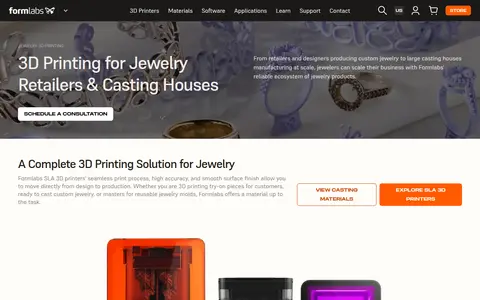
Printed in heat-resistant resin (Formlabs High Temp survives the mold press; castable resin does not) or cast once in silver.
Press it into a rubber mold
The master is pressed into rubber and heated ("vulcanized"). One mold makes hundreds of wax copies.
Inject waxes and cast
Each wax copy is coated in plaster-like investment, burned out in a kiln, and replaced by metal: lost-wax casting. Wax burns out cleaner than printed resin, so molds give better casts and cheaper repeats.
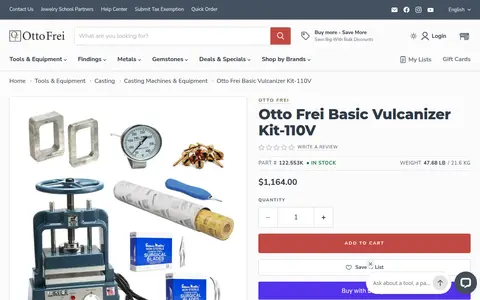
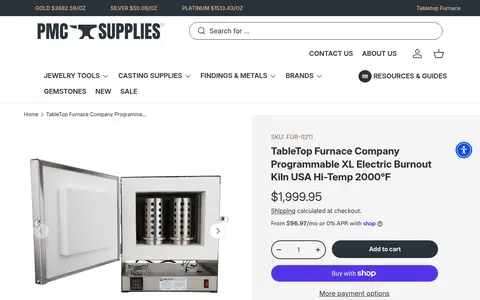
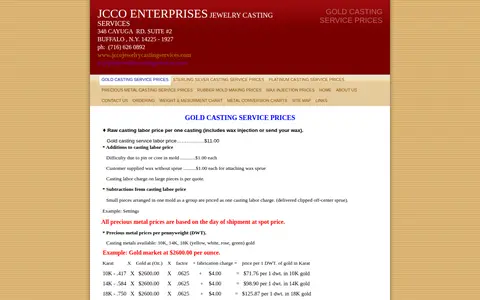
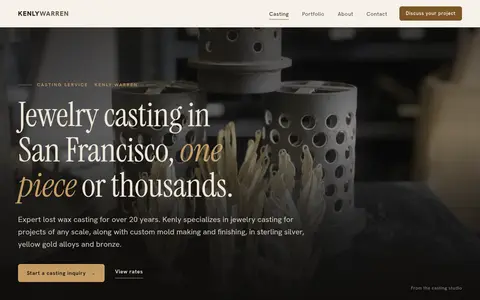
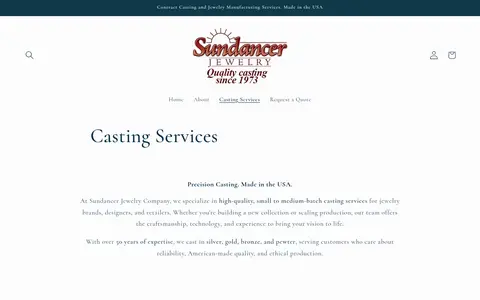
Doing it yourself costs about $1,164 for a vulcanizer kit and $625 for a hand-pump wax injector (Otto Frei). Paying a caster costs $25–65 per mold and about $1.50 per wax (JCCO, Sundancer, Ken Ly Warren), and most casters keep the mold and cast on order.
The three paths side by side
In-house, simple pieces
Send out, advanced pieces
White-label, finished
Start-up cost
$3–5k basic; $8–11k full; plus electrical and ventilation est.
$0–1,500 (CAD fees, molds, trademark)
About $0 plus samples
Cost per piece, before stones
Lowest metal cost (saves about $10–15/g on 14k), plus labour and failed casts
When does in-house pay? In theory, saving $60–90 on each of 20 gold rings a week covers $5–10k of equipment in one to two months. In practice failed casts and 15–30 hours of bench time eat that. It really pays at about 30+ repeat gold castings a week, done by someone with casting skill. est. Sterling silver is the low-risk place to learn, but saves only a few dollars a piece.
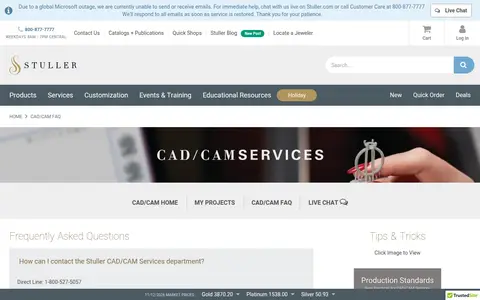
Low-cost equipment from China
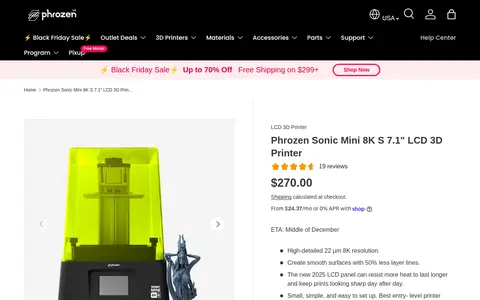
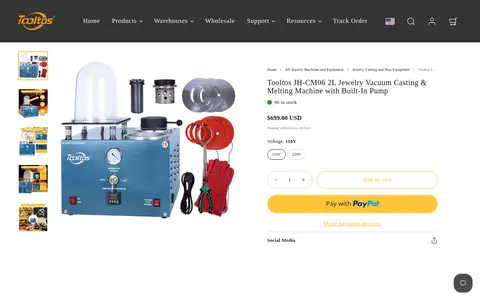
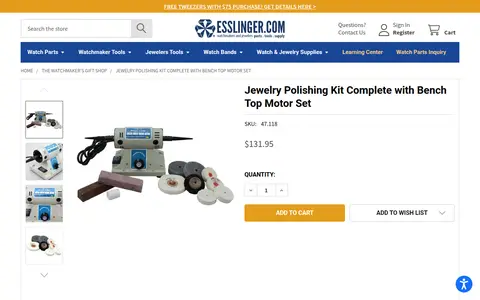
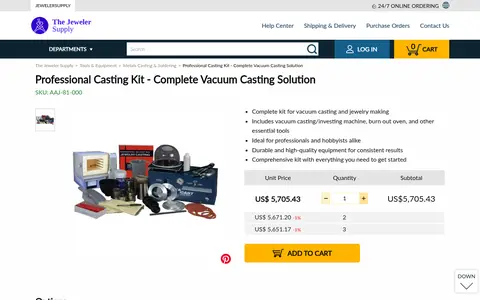
US prices below are from US sellers, often for the same Chinese-made units with duty already paid. Buying direct from China adds roughly 38–41% in duty (Section 301 lists plus a 12.5% tariff from Jul 24 2026, now in court) plus freight, with uncertain warranty and 110 V safety certification. est.(China Briefing, Jul 24 2026)
Screenshots of public pages, taken Nov 12 2026. Each links to the live page.
Safety and space before buying anything
Investment powder is 40–60% cristobalite, a silica that causes silicosis (lung scarring). Mixing and breaking out molds need dust extraction and a HEPA respirator. (Ganoksin)
Power: the caster and kiln each need their own 15–20 A circuit.
Fire: molten metal and a 1,300°F kiln. Non-flammable floor, extinguisher, never unattended.
Leases and home insurance often exclude kilns and open flame. Check first.
Space: about 60–100 sq ft with a separate hot and dusty zone, away from where you film and store stones. est.
Screenshots of public pages, taken Nov 12 2026. Each links to the live page.
On 47th Street (prices not published): Pafco Casting at 36 W 47th St advertises next-day casting; also DMJ Casting (62 W 47th), Carrera Casting (64 W 48th) and Elite Jewelry Casting (48 W 48th).
Stamping law. Anyone who stamps "14K" or "925" must also stamp a trademark that is registered or applied for (15 U.S.C. 297(b)). File a trademark early.
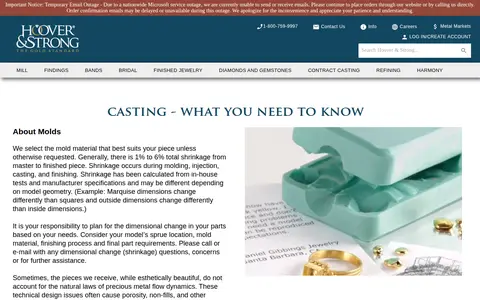
Finished white-label studs and bracelets, and catalog solitaire mountings. Have center stones set by a 47th Street setter or Hoover & Strong. File the trademark.
Weeks 4–12: own designs, cast by others
Commission or license 3–5 designs, with written rights to sell physical copies. Cast through Pafco or DMJ for speed, or Ken Ly Warren or JCCO by mail. Have rubber molds made for the best sellers.
Optional: a $350–500 resin printer
Print castable patterns and ship them to the caster. Low risk, and it builds the skill.
Day 90 review
Look at in-house casting again only at 30+ repeat gold castings a week, and only if the lease, insurance and wiring allow it. No kilns, casters or laser welders before then.
The licence trap
Ready-made 3D models are usually not licensed for selling physical copies. CGTrader's standard licence reportedly bars selling a model "in 3D printed physical form", and Cults3D files default to private use. Get written permission before casting any model you buy. (CGTrader forum; Cults3D, Jan 3 2026)
Costs and margins
Fees matter less than the price the room pays. Each $25 on a 1 ct stone's hammer price swings its profit by about a third.
The price slide
2018About $1,800 per carat wholesale for a 1 ct stone (Draco)
2023Down 60% for 1 ct and 65% for 2 ct in the year (Rapaport)
2025Down 26%. De Beers closed its lab-grown brand Lightbox after a roughly 90% price fall (JCK)
2026Down 13–14% a year by mid-year; a small bounce in Q3. Now $73–142 per carat, about 96% below 2018 (InStore, Nov 11 2026)
The cost lines
Grading: TikTok accepts only IGI or GIA reports. Wholesale stones usually come with an IGI report. GIA charges $15 per carat ($15 minimum) and since Oct 1 2025 grades lab-grown stones only "Premium" or "Standard". (GIA fee schedule, Jul 1 2026)
Gold: about $4,116 an ounce (Nov 9 2026), so about $77/g in 14k and $55/g in 10k. A 14k 4-prong stud setting is about $46 from Otto Frei; setting labour about $20–40 a stone. est.
Shipping and insurance: USPS Priority includes $100 of cover; Registered Mail covers up to $50,000. ParcelGuard-type cover runs about $1.09 per $100. UPS caps jewelry at $500 outside Parcel Pro; FedEx does not insure jewelry. (ShipStation; FedEx)
TikTok Shop fees: 5% referral fee for fine jewelry (6% other jewelry), 3% for a new seller's first 30 days. A reported rise to 8% in Aug 2026 may or may not cover fine jewelry. Unverified Affiliate creators take 5–20%. Payouts run on about a 31-day cycle at first. (FastMoss, Jun 12 2026)
Margin on five typical items
5% fee, seller pays shipping; host time and ads not counted. est.
Item
Our cost
Sells at
Profit
Notes
1 ctw 14k studs (2 × 0.5 ct)
~$272
$399 set price
~$127 (32%)
With a 12% affiliate: ~$79 (20%)
2 ct 14k solitaire ring
~$886
$1,299
~$413 (32%)
A loose 2 ct alone has a $1,032 online median
1 ct IGI loose stone, live auction
~$145
~$100 hammer
~−$45
Break-even ~$145. Pays only bought near the India cash price (~$80–90/ct)
5 ctw 14k tennis bracelet
~$1,742
$1,799
~$57 (3%)
Gold drives this. ~$247 at $1,999; 10k adds ~$230
0.30 ct stone, $1 start
~$43
~$40
~−$3
A loss-leader to keep the room busy
The rules
TikTok changed its diamond rules three times in 2026. These are the ones that matter, and the list of things that get an account restricted.
TikTok Shop
Loose diamonds are invite-only (Restricted Products Policy, updated Nov 4 2026). The Oct 26 2026 update requires a GIA or IGI report for every stone, business and supplier papers on request, and good performance metrics. (JCK, Oct 30 2026)
Finished jewelry (Jewelry Products Requirements, Oct 13 2026): lab-grown stones need an English, unaltered IGI or GIA report; gold needs an accredited lab test (SGS, Intertek, Bureau Veritas and others) from the last 365 days; country of origin on the product or packaging.
Account Health Rating, 0–1,000 over 180 days, starting at 200. Listing bans begin at 150; at 0 the account can be closed. Auctions need a score above 150.
Auctions ("Countdown Bidding") are binding and final sale, but "not as described", damaged and counterfeit claims still apply. Diamonds and precious metals were barred from random "Surprise Sets" in June 2026. (PPC Land, Jun 8 2026)
A human must host. No AI voices, recorded audio, looped video or slideshows; animated avatars may cover no more than half the screen. AI is fine before the stream for scripts and editing. (Social Media Today, Jun 15 2026)
No gambling mechanics: no raffles, lucky spins or purchase-linked draws; giveaways must be free and run through TikTok's own tool. (PPC Land, May 27 2026)
FTC Jewelry Guides
A lab-grown diamond is a diamond, but the word must be immediately preceded, equally prominently, by "laboratory-grown", "laboratory-created" or "[maker]-created" (16 CFR 23.25).
Never "real", "genuine" or "natural" for lab-grown stones (§23.27).
The FTC's 2019 warning letters say the Guides apply on social media, that hashtags and pictures can make claims on their own, and that disclosures hidden in an FAQ don't count.
Gold must be marked by karat ("14K"); plain "gold" means 24K (§23.3).
Tax and auction law
Sales tax: TikTok Shop collects and pays it as a marketplace facilitator. You still need a resale certificate to buy stock tax-free, and may need to register in your home state. (Zamp)
Form 1099-K threshold is back to $20,000 and 200 transactions. All income is taxable regardless. (CPA Practice Advisor, Oct 23 2025)
Auctioneer licences vary by state. Mississippi licenses online auctions; Ohio requires a licence for inventory bought to resell. No ruling on TikTok Live auctions was found, so check your state's auctioneer board first. (MS Auctioneer Commission; Value Added Resource)
Shill bidding (bidding on your own lots) lets the buyer void the sale under UCC §2-328.
What gets an account banned or restricted
Calling lab-grown stones "natural", "real" or "genuine", or plain "diamond" without "lab-grown", in titles, voice or hashtags.
Selling moissanite or CZ as diamond; fake, altered or mismatched reports; wrong 4Cs or origin.
Listing loose diamonds without the invite, or hiding them in another category.
"Investment", "resale value" or "worth $5,000 at appraisal" claims.
An AI voice, recording, loop or slideshow as host.
Taking bids in chat, side auctions, changing terms mid-auction, or shill bidding.
Raffles, spins, purchase-linked draws, or diamonds in Surprise Sets.
Sending buyers to Venmo, Zelle, DMs or your own website.
Ignoring disputes, letting Account Health fall to 0, or copying brand names and designs.
Risks
Risk
How bad
What to do
Fake stones or fake reports from suppliers
High if buying cheap online. IGI caught a 6 ct lab stone with a fake GIA inscription (IGI); one writer's 50 online "lab diamonds" were all moissanite (Ring Mint, Sep 2 2026).
Known suppliers only. Check every report number on the lab's site, read the girdle inscription under a loupe, and test every stone with a multi-tester.
Price collapse eating stock
High. −26% in 2025; resale is about 20–30% of purchase price.
Hold little stock and turn it in weeks. Prefer memo or drop-ship. Price from today's market, not old cost.
Platform rule changes
High. Three diamond rule changes in 2026.
Keep an Instagram account and an email list; don't depend on one account.
Returns abuse and stone swapping
Medium. "Not as described" claims survive final sale.
Video each stone and its inscription before shipping; check the inscription on every return; answer disputes within 24–48 hours.
Chargebacks from impulse wins
Medium.
Read the lot rules at the top of each live; keep a record of each winning bid; combine shipments.
Poor stones hurting reviews
Medium. Bright light hides poor cut.
Choose on cut proportions, not just color and clarity; show the report and real measurements.
Stock at home, on camera
Real. A stream tells thousands that valuables are there.
No address, labels or full trays on camera; a safe; ship from a commercial or PO box address.
Insurance
Home policies exclude business stock.
A jewelers block policy (Jewelers Mutual), usually needing a rated safe and a monitored alarm.
Three ways in, smallest to largest
A. Affiliate
B. Finished jewelry
C. Loose-stone auctions
What it is
Promote other sellers' lab-grown jewelry for a 5–20% commission
Your own TikTok Shop of studs, pendants and solitaires, bought finished or drop-shipped; sold on Live at set prices
Buy 50–200 IGI stones and run frequent $1-start auctions
TikTok gate
Creator eligibility only
Jewelry document rules; not invite-only
Invite-only since Oct 26 2026
Start-up cost est.
$0–300
$2,500–6,000
$15,000–40,000
Earning per sale est.
$10–60 commission
$80–400 profit
$0–75 per 1 ct stone
Host time a week est.
3–6 hours
6–10 hours (2–3 lives)
15–30 hours (near-nightly lives)
Main risk
Low; earnings small
Some held stock; quality complaints
Price collapse, approval, safety
On camera and off camera
The host, live and in person: hosting every Live, showing stones under the loupe, answering chat, calling the countdown, signing supplier and TikTok applications, and every money decision.
The back office (staff or software): supplier comparisons, daily price checks, checking every report number before a stone goes on air, pricing suggestions, run-of-show scripts, listing titles that pass FTC and TikTok wording rules, post-show bookkeeping, and dispute evidence packs.
First steps
Wait on a launch, and run a small, cheap test instead. Lab-grown jewelry is still open, about 30% margins exist on simple set pieces, and the demand is real.
Study before spending
$0 · 1–2 weeks
Watch 2–4 more lives, including an evening show, and build a run-of-show, a price-by-carat table and a script template.
Check your state's auctioneer-licence rule and get one jewelers block insurance quote.
Set up the business paperwork
About $100–500 · 1–2 weeks
An LLC or sole proprietorship, an EIN, a state sales-tax permit and a resale certificate.
Then apply for a TikTok Shop seller account in finished lab-grown jewelry.
A first small line and 3–4 test lives
About $2,000–4,000
10–20 IGI-certified pieces: studs, solitaire pendants and one or two solitaire rings, in 14k or 10k, from the suppliers rated above.
Run set-price Lives and track every number.
If sell-through and margin hold for 4–6 weeks, apply for the loose-diamond invite with that record. Only then consider auctions of loose stones.
Glossary
Lab-grown diamond
A real diamond made in a factory. Must be sold as "laboratory-grown", "laboratory-created" or "[maker]-created".
Moissanite
A cheaper, different stone (silicon carbide) that fools basic heat testers. A multi-tester catches it.
Cubic zirconia (CZ) and simulants
Anything that looks like a diamond but isn't one.
Chemical vapor deposition (CVD)
Growing a diamond layer by layer from gas. Mostly India.
High pressure, high temperature (HPHT)
Growing a diamond by squeezing carbon in a press. Mostly China.
Carat (ct) and carat total weight (ctw)
Weight: 1 carat is 0.2 grams. Carat total weight adds up every stone in a piece.
The 4Cs
Carat, color (D is whitest), clarity (flawless down to included) and cut.
IGI, GIA, GCAL
Grading labs. IGI grades most lab-grown stones and inscribes "LG" plus the report number on the edge. TikTok accepts only IGI or GIA.
Girdle
The thin outer edge of a diamond, where the inscription goes.
Business-to-business (B2B)
Buying as a business from suppliers, usually with a resale certificate.
Resale certificate (NY Form ST-120)
A state form that lets a business buy stock for resale without paying sales tax.
Memo
Stones lent by a dealer; you pay only for what sells. Usually for established buyers.
Drop-ship and white-label
The supplier ships straight to your customer; or makes the piece and you sell it under your brand.
A platform that collects and pays sales tax for its sellers.
Jewelers block
Insurance for jewelry stock, at home and in transit.
Master, rubber mold, lost-wax casting
One perfect original; a rubber copy of it that makes many waxes; and the process of burning out each wax and filling the space with metal.
Pennyweight (dwt)
A jeweler's metal weight, 1.555 grams. Casters price gold per pennyweight.
Cristobalite and silicosis
The silica in casting investment powder, and the lung scarring it causes.
Melee
Tiny diamonds, under about 0.2 carat, used in tennis bracelets and pavé.
Section 301 tariff
US import duty on goods from certain countries: 10% on lab-grown stones from India, 12.5% from China.
How this was researched
Public web sources only, each linked with its date, read on or before Nov 12 2026. Nothing was bought, no supplier was contacted, and no accounts were opened. Many wholesale prices come from trade press quoting paywalled price lists (Edahn Golan, Rapaport, IDEX), so treat them as close but not exact. Live-show observations are our own notes from one public TikTok Live and are approximate.
est. marks our own estimate. Unverified marks a figure with only one weak source or a source we could not open.
Not yet verified
Wholesale prices for 0.5 ct stones, studs, tennis bracelets and mountings, all estimated.
Nivoda's returns and minimums; VDB and IDEX eligibility and fees; Stuller Pack & Ship fees.
Whether every 47th Street firm listed is trade-only, and their memo terms.
US duty rates, sourced only from an Indian trade body; confirm with a customs broker.
Published rates at the 47th Street casting houses, and trade setting prices for tennis bracelets.
Whether TikTok's fine-jewelry referral fee rose to 8% in Aug 2026.
This guide is research, not legal, tax or financial advice.